
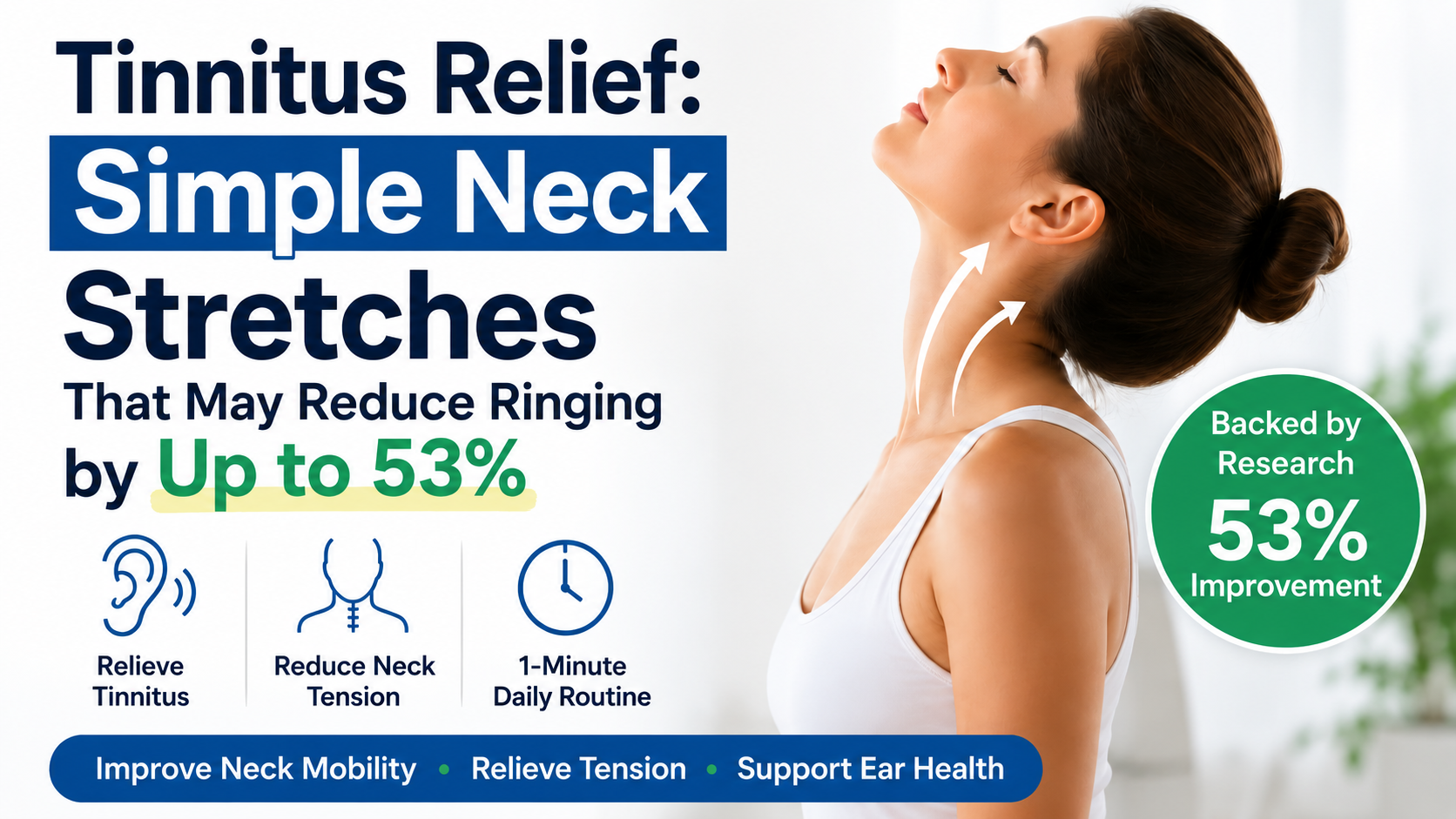
Tinnitus May Improve by 53% with Simple Neck Stretches
Do you hear a constant ringing, buzzing, or whistling sound in your ears? Have you been told that your ears are perfectly healthy, yet the noise never goes away?
Surprisingly, research suggests that for many people, tinnitus may not originate in the ears at all. Studies indicate that approximately 70% of tinnitus patients experience changes in their symptoms when moving their neck, jaw, or head, suggesting that the neck may play a significant role.
In this article, you’ll learn why neck tension can contribute to tinnitus and discover simple one-minute stretching exercises that may help reduce your symptoms.
The Real Cause of Tinnitus May Be Your Neck, Not Your Ears
Many people assume tinnitus is always caused by an ear problem. However, that’s not always the case.
A comprehensive review conducted by researchers at Sapienza University of Rome found that around 70% of tinnitus sufferers experienced changes in the loudness or pitch of their tinnitus depending on movements of the neck, jaw, or head.
This type of tinnitus is often referred to as somatosensory tinnitus, where signals from muscles and joints influence the brain’s auditory pathways.
Why does this happen?
Although your ears are located on your head, the nerves and blood vessels supplying them pass through your neck. Modern habits such as prolonged smartphone use, computer work, and poor sleeping posture can cause the muscles surrounding the neck to become tight and stiff.
When these muscles remain tense, they may compress nearby nerves and blood vessels, potentially contributing to hearing disturbances and tinnitus in susceptible individuals.
Many patients report experiences such as:
- “The ringing gets louder when I turn my head.”
- “The sound becomes quieter in certain positions.”
These are common characteristics of somatosensory tinnitus.
Research Shows Neck Stretching Can Reduce Tinnitus Symptoms
The benefits of neck stretching aren’t simply based on personal experiences.
Clinical studies have reported that approximately 53% of participants experienced improvement in their tinnitus symptoms after performing therapeutic neck exercises and stretching programs.
Deep muscles around the upper cervical spine—including the suboccipital muscles and the scalene muscles—play an important role in supporting the head and neck.
When these muscles become tight, they may increase mechanical stress around nearby nerves and blood vessels.
Gentle stretching helps relax these muscles, improve mobility, and may reduce unnecessary pressure.
In many cases, muscle flexibility is just as important—if not more important—than muscle strength when it comes to maintaining healthy neck function.
A Simple Neck Stretch You Can Do in One Minute
The following exercises are easy to perform at home and require no equipment.
1. Neck Extension Stretch
- Pull your shoulder blades gently together.
- Slowly tilt your head backward.
- Feel a gentle stretch along the front and sides of your neck.
- Hold comfortably without forcing the movement.
2. Gentle Neck Rotations
After completing the first stretch:
- Slowly rotate your head in a circular motion one or two times.
- Reverse the direction and repeat.
- Keep the movement slow and controlled.
The goal is relaxation—not pushing your neck to its limit.
Advanced Stretching for Tight Neck Muscles
If your neck feels especially stiff or you’ve had tinnitus for a long time, a slightly deeper stretch may be helpful.
Step 1
Repeat the neck extension stretch and hold the position for approximately 10 seconds.
Step 2
Perform a gentle side stretch.
- Tilt your head toward one shoulder.
- Place your hand lightly on the side of your head.
- Apply only slight additional pressure—just enough to increase the stretch by about 10%.
- Hold for 10 seconds.
- Repeat on the opposite side.
Finish by slowly rotating your neck once or twice in each direction.
Remember:
Gentle stretching performed consistently is far more effective than aggressive stretching done occasionally.
Important Safety Tips
Although these stretches are simple, they should never be painful.
Stop immediately if you experience:
- Sharp pain
- Numbness
- Tingling
- Pain radiating into your shoulder or arm
These may indicate that you’re stretching too aggressively or that another condition requires medical evaluation.
Consistency is the key.
Perform gentle stretches frequently rather than trying to force a dramatic improvement in one session.
How Often Should You Stretch?
The best time is whenever you’ve been sitting for an extended period.
If you work at a computer, drive for long hours, or frequently use your smartphone, take short stretching breaks throughout the day.
Your neck often becomes stiff not because it’s working too hard—but because it stays in the same position for too long.
Aim for:
- 5–10 stretching sessions per day
- 1–2 minutes per session
For example:
- Morning after waking up
- After lunch
- During work breaks
- Before bedtime
Building these stretches into your daily routine makes consistency much easier.
Good Posture Matters Just as Much
Stretching alone isn’t enough if poor posture continues to strain your neck.
Simple adjustments can make a big difference:
- Hold your smartphone closer to eye level.
- Position your computer monitor at or slightly above eye height.
- Stand up regularly during long periods of sitting.
- Stretch your neck and shoulders throughout the day.
Many people notice meaningful improvements simply by combining better posture with regular stretching.
When Professional Treatment May Be Needed
Home exercises can be very helpful, but they aren’t a complete solution for everyone.
If symptoms persist, healthcare professionals may recommend treatments designed to relieve muscle tension and address underlying causes.
Some individuals also have medical conditions that contribute to chronic muscle tightness, such as dehydration, metabolic disorders, or other health issues.
Persistent tinnitus, sudden hearing loss, dizziness, or severe symptoms should always be evaluated by an ear, nose, and throat (ENT) specialist or another qualified healthcare provider.
Final Thoughts
Tinnitus is a complex condition, and its causes vary from person to person.
For individuals whose symptoms are related to neck muscle tension, regular stretching, improved posture, and healthy daily habits may significantly reduce discomfort.
The key is consistency.
Just one or two minutes several times a day may help improve neck mobility and, over time, lessen tinnitus symptoms.
If your symptoms continue or worsen, seek professional medical evaluation to determine the underlying cause and the most appropriate treatment.