
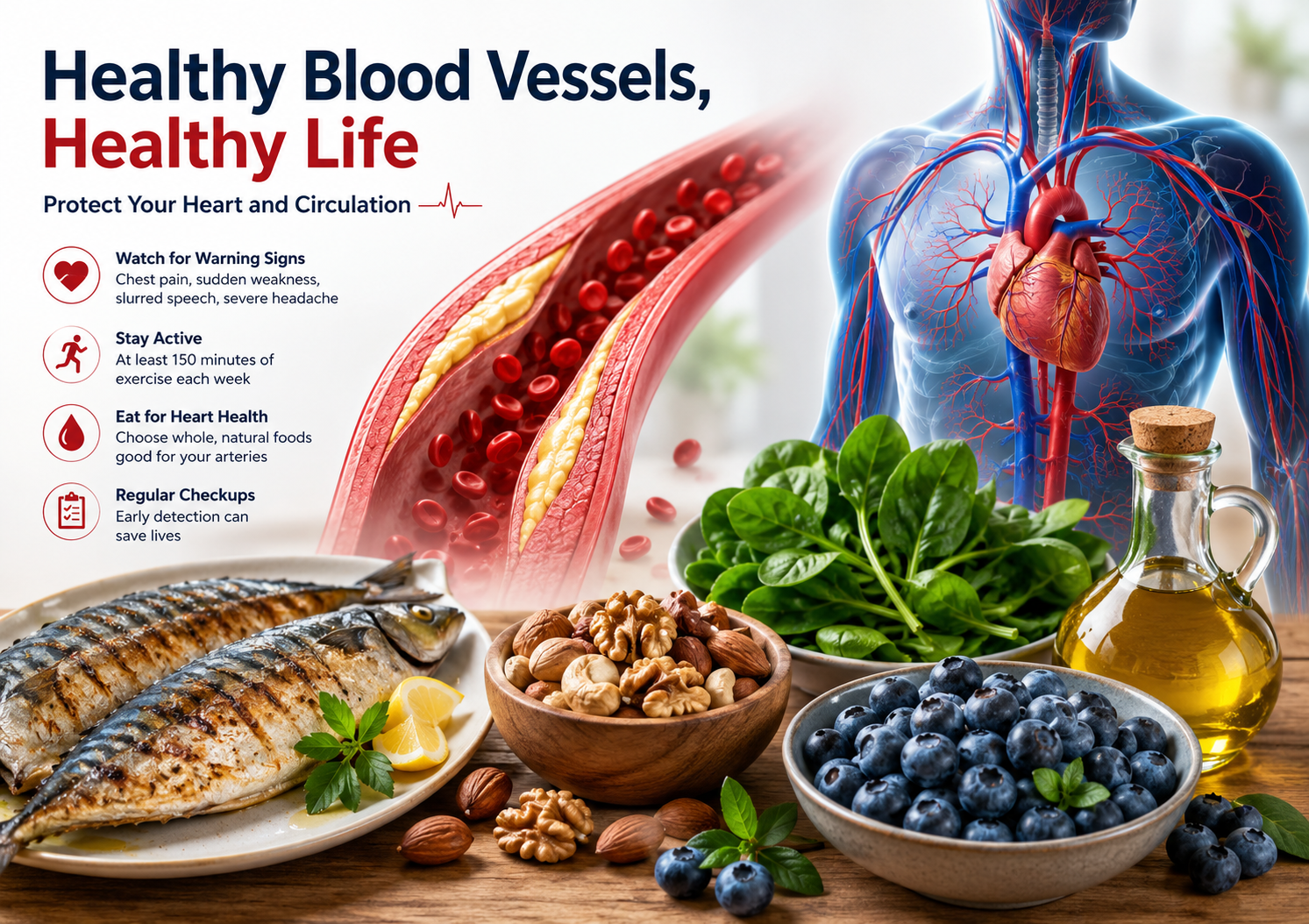
How to Keep Your Blood Vessels Healthy: Warning Signs and the Best Foods for Your Arteries
Healthy blood vessels are essential for life. Unfortunately, arteries can become up to 70% blocked without causing noticeable symptoms, making prevention and early care incredibly important. In this article, we’ll explore the warning signs of vascular disease, practical ways to protect your arteries, and the best foods to support long-term cardiovascular health.
Why Blood Vessel Health Matters
Blood vessels carry oxygen and nutrients to every part of your body. If an artery becomes blocked or ruptures, it can quickly become a life-threatening emergency. Many serious medical conditions treated in emergency rooms are directly related to problems affecting the blood vessels.
Conditions such as stroke, brain hemorrhage, and heart attack all begin with damage to the vascular system. Even severe blood loss after traumatic injuries can become fatal because of damaged blood vessels. This shows just how critical a healthy circulatory system is.
One of the biggest concerns is that arteries may become significantly narrowed—sometimes up to 70%—without producing obvious symptoms. That’s why prevention, regular health checkups, and recognizing early warning signs are so important.
Warning Signs of Heart Artery Problems
If you experience chest tightness, pressure, or squeezing pain while climbing stairs or exercising, it could indicate reduced blood flow to the heart. These symptoms should never be ignored.
Pain that spreads to the left arm, shoulder, jaw, or neck is another classic warning sign of heart disease. Unexpected cold sweats, nausea, or shortness of breath may also signal a heart-related emergency.
If chest pain improves after resting, don’t assume everything is fine. Temporary relief may still indicate unstable heart disease, and immediate medical evaluation is essential. Delaying treatment could significantly increase the risk of a heart attack.
Signs of a Possible Stroke
Sudden weakness or numbness affecting one side of the body—such as an arm or leg—may be an early symptom of a stroke. Even if the weakness seems mild, seek emergency medical care immediately.
Slurred speech, difficulty finding words, or suddenly speaking unclearly are also major warning signs. Friends or family members often notice these changes before the person experiencing them does.
Other serious symptoms include sudden vision loss in one eye, blurred vision, or an extremely severe headache unlike anything you’ve experienced before. A sudden “thunderclap headache” may indicate bleeding in the brain and requires immediate emergency treatment.
Don’t Ignore Poor Circulation in Your Legs
Pain in your calves while walking that improves with rest may be a sign of peripheral artery disease. This isn’t simply muscle soreness from exercise—it’s a warning that blood flow to your legs may be reduced.
Cold feet, slow-healing wounds, or sores that don’t improve can also indicate poor circulation. These symptoms are especially important for people with diabetes.
If your toes or feet begin turning bluish or pale, seek medical attention immediately. These signs should never be ignored.
The Foundation of Healthy Blood Vessels
Protecting your arteries starts with managing your blood pressure, blood sugar, and cholesterol levels. Reducing excessive salt and added sugar, staying hydrated, and maintaining a balanced diet all play an important role.
Regular exercise is one of the most effective ways to maintain healthy blood vessels. The American Heart Association recommends at least 150 minutes of moderate-intensity physical activity each week, or about 20 to 30 minutes per day.
For people at higher risk, a carotid artery ultrasound may help detect plaque buildup before symptoms appear. Early screening can provide valuable information about your vascular health and future cardiovascular risk.
Why Fatty Fish Is Good for Your Heart
Fatty fish such as mackerel and Spanish mackerel are rich in natural omega-3 fatty acids. These healthy fats help reduce inflammation, support healthy cholesterol levels, and lower the risk of plaque buildup inside the arteries.
Health organizations around the world recommend eating foods rich in unsaturated fats for people with high blood pressure or cardiovascular disease. Including fatty fish in your meals a few times each week is a simple way to support heart health.
Whether grilled, baked, or steamed, oily fish can be a delicious and heart-friendly addition to your regular diet.
Nuts: Small but Powerful
Nuts such as walnuts, almonds, and pistachios are packed with heart-healthy unsaturated fats, fiber, vitamins, and antioxidants. They help reduce inflammation and support healthy blood vessels.
People with high blood pressure or existing cardiovascular conditions can particularly benefit from including moderate amounts of nuts in their daily diet.
A small handful of unsalted mixed nuts makes an excellent snack that is both satisfying and nutritious.
Leafy Greens and Olive Oil: A Heart-Healthy Combination
Leafy green vegetables like spinach are rich in dietary fiber, vitamins, minerals, and antioxidants. These nutrients help support healthy cholesterol levels, reduce inflammation, and protect blood vessels from damage.
Vegetables also contain powerful plant compounds such as polyphenols and vitamins C and E, which help fight oxidative stress and support long-term cardiovascular health.
Extra virgin olive oil is one of the key components of the Mediterranean diet. Drizzling olive oil over fresh salads or cooked vegetables is an easy way to enjoy its heart-protective benefits.
Blueberries: A Superfood for Your Arteries
Blueberries and other berries are loaded with antioxidants, especially polyphenols and anthocyanins. These compounds help protect blood vessels, reduce inflammation, and may improve overall cardiovascular function.
Fresh blueberries are especially delicious during their peak season, but frozen blueberries also retain most of their nutritional value and are an excellent option year-round.
Since blueberries require little preparation, they make a convenient snack or a healthy addition to yogurt, oatmeal, or smoothies.
Final Thoughts
Every healthy meal contributes to healthier blood vessels over time. By adding fatty fish, nuts, leafy green vegetables, olive oil, and blueberries to your regular diet, you can significantly support your cardiovascular health.
Most importantly, never ignore warning signs such as chest pain, sudden weakness, slurred speech, or severe headaches. Early medical attention can save lives. Small daily habits today can help protect your heart and blood vessels for years to come.